Reencle Prime Review: Real Compost From Your Kitchen?
The Reencle Prime is an electric kitchen composter that makes real compost instead of drying food scraps. It takes almost everything from the kitchen, including meat, fish and dairy, and live microbes inside break it down.
It is not a cheap machine, so this review sticks to what owners report after living with it: what it takes, when it smells, what it costs to run and how to use the compost.
Quick verdict: Buy it if you want compost from your kitchen, not just a smaller bag of trash. It fits these homes best:
- An apartment or a small yard, where scraps need to go somewhere every day, meat, dairy and cooked leftovers included.
- Gardeners and houseplant owners who want something they can actually mix into soil.
- Households of one to four people. The listing puts it at up to 2.2 lb of scraps a day.
Among electric composters, this is the one to buy when compost, not dried scraps, is what you are after.
Reencle Prime Electric Composter
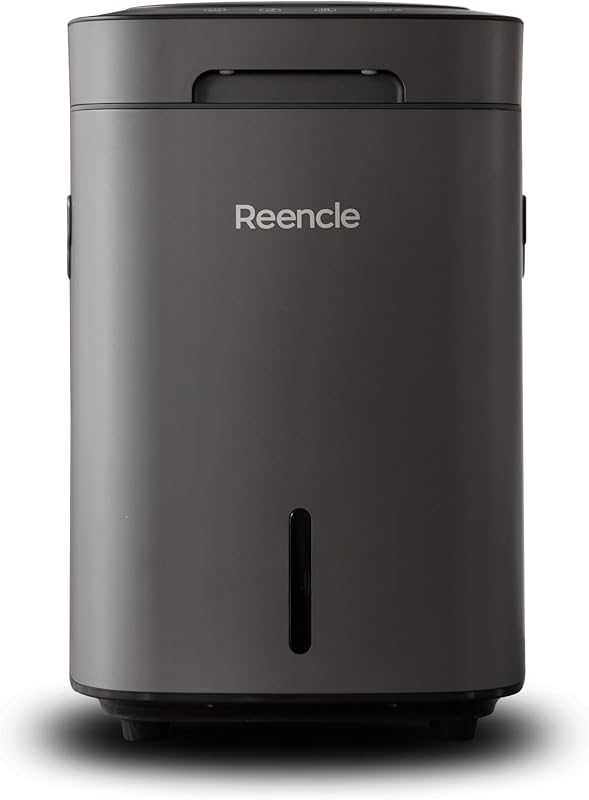
The Prime is Reencle’s 14 L floor model and the Reencle with the most owner ratings on Amazon. Lift the lid, drop in peels, coffee grounds or last night’s leftovers, close it and walk away. There is no batch to start and no cycle to wait out. About four in five owner ratings are four or five stars, and the praise owners repeat most is how quiet it is.
How the Reencle Prime Works
Inside the bin sits a bed of brown, crumbly material full of microbes. The compost starter pack in the box is what gets that bed going. A paddle turns the bed slowly and air moves through it, so the microbes get the oxygen they need, the same way turning a backyard pile wakes it up. Scraps you add get mixed into the bed and eaten. Reencle says most scraps break down in 2 to 24 hours, depending on what they are.
That design shapes daily life with it. The bed is alive, so it needs what any compost pile needs: food, moisture and air. The machine runs around the clock on low power. You add scraps whenever you have them, a handful of peels at breakfast, a plate scraping after dinner. When the bed rises toward the max line, you take compost out with the shovel from the box. What you take out is fresh and active, closer to young compost than a finished product, so it rests a few days before it goes into soil.
Most electric composters work another way. They heat and grind a batch of scraps into dry flakes. The flakes are smaller and lighter, but they are still food scraps with the water taken out. Mix them into a damp garden bed and they can start to rot and smell like food again. One Reencle owner on Amazon came to it after a dryer-type machine and calls the Reencle much better.
Reencle also sells a larger Gravity model and a newer countertop model, the Essential. The Prime is the one with the long owner record, and the one this review covers.
How It Does on Real Jobs
Daily Kitchen Scraps
Peels, cores, coffee grounds, tea leaves, bread crusts, the half bowl of rice nobody finished. One owner with more than a year on the Prime, in a home of two people, says it cut their household waste by about half. Their scraps had been filling the trash bin regularly.
The manual asks for scraps in small pieces, and that matches what every composter learns sooner or later. Microbes work from the outside in, so more cut surface means faster work. In our own piles, a melon rind chopped into chunks is gone long before a whole half rind. Keep a cutting board habit: quarter the rinds, break up corn cobs and squash peel, and the bed keeps pace.
Meat, Dairy and Cooked Food
This is the reason many owners chose a Reencle in the first place. Recent five-star reviews describe meat, dairy and cooked leftovers going in and breaking down with no fuss, and the machine staying quiet through it.
A backyard pile is a poor home for the same food. Meat scraps and cheese in an open pile draw raccoons, rats and the neighbor’s dog, which is why most composting guides tell you to keep them out. A sealed bin indoors with a microbe bed built for it changes that. Go through the manual’s list of what to leave out before the first week, cut cooked food into small pieces, and spread a heavy dinner’s scraps over a day or two rather than all at once.
Smell and Noise in a Small Kitchen
Quiet is the praise owners repeat most, from short first-week reviews to four-star owners. The listing puts it as low as 28 dB. In a studio apartment or an open kitchen where the machine runs day and night, that matters more than any other spec.
Smell is where owners split. The long-term owner says it does not smell at all and does not draw insects. With the lid closed and the scraps inside, there is no open pail on the counter for fruit flies to find. A smaller group notices a faint smell all the time. One four-star owner who loves how quiet it is found the carbon filter not quite strong enough for their kitchen. In compost terms, that smell usually comes from a bed that is too wet, too full or behind on its filter, and each of those has a fix (see Getting the Most Out of It).
What Comes Out and How to Use It
Test results Reencle has shared for the finished material show high levels of nitrogen and organic matter. Kitchen scraps also carry a lot of salt, and salt does not break down, so the output can run high in sodium. That is one more reason to mix it with soil rather than use it on its own. What separates the Reencle from the dryer-type machines: the scraps have been eaten and turned into something new, not just shrunk.
Fresh out of the bin does not mean ready to plant into. Reencle advises letting the output mature for at least five days and then mixing about five parts soil to one part compost. In our composting experience, longer is better. The year-long owner says the same thing in plain words: the result does not go straight into soil. In our composting experience, it behaves like a rich, fresh compost with a lot of manure in it. It is strong. Let it sit in a covered bucket, or dig it into a yard pile, then spread it.
Once cured, it earns its keep. Work a few handfuls into the top of a raised bed before planting, mix it into potting soil for houseplants at that five-to-one ratio, or scatter it around tomatoes and peppers as a side dressing in midsummer. Gardeners with a yard pile get one more use: a scoop of active Reencle output is a lively boost for a pile that has gone sluggish.
📝 Editor’s note: The longest-running owner review says the output can’t go straight into soil, and from our own composting that is no surprise. Anything fresh out of an active, microbe-rich process is strong stuff, like manure straight from the barn or the hot center of a pile two weeks in. Put it right against a seedling’s roots and it can burn them. Give it a week or two in a covered bucket, or mixed into a yard pile, and it settles into something you can spread around tomatoes and houseplants without a second thought. Keep two buckets and rotate them: one curing, one filling.
Getting the Most Out of It
Most owners are happy with it. The complaints that do come up are below, each with what to do about it.
A faint smell in some kitchens. Some owners notice a smell that hangs around all the time. Don’t fill past the max line, since an overfull bed can’t get enough air. Keep the bed moist but not wet: it should feel like a wrung-out sponge, the same test we use on an outdoor pile. If it looks soggy, hold back on watery scraps like melon and soup for a day or two. A sweet smell is a sign of too much nitrogen, the same as in an outdoor pile, and a handful of sawdust after each emptying brings it back into balance. Bread crusts do a similar job. Replace or clean the carbon filter on the schedule in the manual. The filter comes from Reencle directly, not from Amazon.
A bed that gets too dry or packed. The same moisture test works the other way: a dry, packed bed makes the paddle work harder. Add water the way the manual describes and keep the bed under the max line. Keep your Amazon receipt: Reencle’s warranty runs from the date of purchase, and the receipt is what proves it. If a warning light stays on, contact Reencle support while you are still inside the return window.
What it costs to run. It runs all the time, but on little power. Reencle rates it at about 1.25 kWh a day, which the company puts at around two dollars a month in the US. Add a bag of Compost Starter now and then, and a replacement carbon filter from Reencle. Next to the price of the machine, running costs stay small.
What we like:
- Makes real compost material, high in nitrogen and organic matter in Reencle’s own tests, not dried flakes of food
- Takes meat, dairy and cooked leftovers that a backyard pile can’t handle
- Continuous add: drop scraps in any time, with no batch or cycle to wait for
- Quiet, as low as 28 dB by the listing, and the praise owners repeat most
- Everything to start in the box: carbon filter, compost starter pack and shovel
What to watch for:
- A faint smell in some kitchens. Stay under the max line, keep the bed damp but not wet, and change the carbon filter on schedule.
- The output needs curing before it goes into soil. Rest it at least five days in a bucket, then mix about five parts soil to one part compost.
⭐⭐⭐⭐⭐ “I was looking for a composter that didn’t just dry the organic matter but actually breaks them down and is usable as compost. Even though you can’t directly add the result into soil, it still does a lot more than the other dehydrating machines. The capacity was perfect for two people as we don’t have a lot of scraps but enough that we were filling our trash bin regularly. By using this machine we were able to cut down on our waste by 50%. It’s easy to set up and use and so far we had this for more than a year and nothing has broke. It doesn’t attract any insects and doesn’t smell at all.”: Verified Amazon purchase, more than a year of ownership
Reencle Compost Starter and Filter
The box comes with one compost starter pack and one carbon filter. After that, these two are what you keep buying.
The Reencle Compost Starter on Amazon holds 4.4★ from 18 ratings. Per the listing, it is a mix of microbes, activated carbon and wood pellets. The listing describes it as the starter that sets up the bed and keeps it working, so it is what you add when you start a fresh bed. Follow the manual for how much to add. It works like a shovel of finished compost tossed onto a slow outdoor pile: it brings back the workers.
Replacement carbon filters come from Reencle directly. A search on Amazon turns up filters made for other brands’ machines, so order from Reencle and keep a spare on hand.
Our verdict: Buy it. If you want your kitchen scraps to become compost, the Reencle Prime is the electric composter to own. It takes the meat, dairy and leftovers a backyard pile can’t, it runs quietly day and night, and what comes out is real compost material for beds and houseplants. Keep the bed damp but not soggy, stay under the max line, change the filter on schedule, and give the output a few days to cure before it goes into soil. Register the warranty the day it arrives.
FAQ
Is the Reencle Prime worth it?
Yes, if you want compost from your kitchen scraps and have no yard pile, or a pile that can’t take meat and dairy. It is a premium-priced machine, and what you get for that is a microbe bed that turns scraps into usable compost instead of dried flakes. It holds 4.3 stars from 410 ratings on Amazon, with about four in five ratings at four or five stars, and the longest-running owner review reports more than a year of use with nothing broken.
Does the Reencle Prime make real compost?
Yes. Live microbes break the scraps down instead of a heater drying them out. Test results Reencle has shared show high nitrogen and organic matter. It is fresh and strong when it comes out, so follow Reencle’s advice to let it mature at least five days and mix about five parts soil to one part compost before planting into it.
Can you put meat and dairy in a Reencle?
Yes. Owners report meat, dairy and cooked leftovers breaking down without trouble, and it is one of the main reasons people choose a Reencle over a backyard pile. Cut them into small pieces, spread a big load over a day or two, and check the manual’s list of what to leave out.
Does the Reencle smell?
For most owners, no. It has a 3-layer carbon filter, and the owner with more than a year of use says it doesn’t smell at all and draws no insects. Some owners notice a faint smell all the time. The fix is to stay under the max line, keep the bed moist but not wet, and change the carbon filter on schedule.
How much electricity does the Reencle Prime use?
Very little for a machine that runs all the time. Reencle rates it at about 1.25 kWh a day, which the company puts at around two dollars a month in the US. Your cost depends on your local electricity rate.
How often do you need to add Reencle microbes?
Not often. A compost starter pack comes in the box to build the first bed, and the bed keeps itself going as long as it gets scraps, moisture and air. Owners add the Reencle Compost Starter when they start a fresh bed, restart after a full clean-out, or when the bed stalls and scraps stop breaking down. The manual gives the amount to use each time.
How do you use Reencle compost in the garden?
Let it cure first: at least five days, per Reencle, and a week or two in a covered bucket is better still. Then mix it in at about five parts soil to one part compost. Work it into raised beds before planting, blend it into potting soil for houseplants, or use it as a side dressing around tomatoes and peppers. It also gives a slow yard pile a boost.
You might also like
Free for beginners
Get the Free Composting Starter Kit
5-day email course + printable guide + our top product picks. Everything you need to start composting confidently.
Get Free AccessNo spam. Unsubscribe any time.