Backyard Composting: 3 Methods Compared (and How to Choose)
According to the EPA, composting at home can keep roughly 30% of household waste out of the garbage. That is a significant number, but most composting guides only show you one way to do it. In reality, there are three main backyard methods: tumbler, stationary bin, and open pile. Each one works. The difference is how they fit your yard, your budget, and your patience.
This article breaks down all three side by side so you can pick the right one. If you are new to composting entirely, start with our complete guide to composting for the fundamentals, then come back here to choose your method.
Why Backyard Composting Works
When food scraps and yard waste end up in landfills, they decompose without oxygen and produce methane, a greenhouse gas roughly 80 times more potent than CO2 over a 20-year period. Backyard composting keeps that organic matter out of the landfill and turns it into something useful.
Finished compost improves soil structure, increases water retention, and feeds the microbial life that plants depend on. According to the EPA, composting reduces the need for chemical fertilizers and helps suppress plant diseases. It also saves money. A 40-pound bag of compost costs $5-8 at a garden center. A single backyard system produces that much every few months for free, or close to it.
3 Backyard Composting Methods Compared
The three most common backyard composting setups are tumbler composters, stationary bins, and open piles. They all produce finished compost. They differ in cost, speed, space requirements, and how much work they ask of you. Here is a quick comparison before we dig into each one.
| Tumbler | Stationary Bin | Open Pile | |
|---|---|---|---|
| Cost | $80-300+ | $30-150 | $0-30 |
| Speed | 4-8 weeks | 3-6 months | 6-12 months |
| Space Needed | Small | Medium | Large |
| Pest Resistance | Excellent | Good | Low |
| Effort | Low | Medium | High |
| Best For | Small yards, fast results | Suburban yards, balanced needs | Large yards, bulk waste |
Tumbler Composting
A compost tumbler is a sealed drum mounted on a frame. You load it with scraps and browns, close the lid, and spin it every day or two. The sealed design keeps pests out completely.
Tumblers produce finished compost in 4-8 weeks, making them the fastest backyard option. They look clean, work in tight spaces, and require the least physical effort. The trade-off is price: $80-300+ for a quality dual-chamber model. Batch size is also limited, so a tumbler handles kitchen scraps well but cannot keep up with a big fall leaf drop.
Best for: small yards, speed-focused composters, and neighborhoods with pest concerns.
See our picks for the best compost tumblers for specific model recommendations.
Stationary Bin Composting
A stationary bin is an enclosed container, usually plastic or wood, with an open bottom that sits directly on the ground. You add materials through the top and harvest finished compost from a door at the base.
Bins cost $30-150 and strike a middle ground between speed and simplicity. They contain the pile, reduce odor, and offer decent pest resistance. Expect 3-6 months to finished compost with regular turning. The open bottom lets earthworms migrate up into the pile, which accelerates decomposition naturally.
Best for: suburban yards with moderate waste volume and a balanced budget.
See our picks for the best outdoor compost bins if you want to compare specific models before buying.
Open Pile Composting
Open pile composting is the simplest approach. You stack organic material on the ground, keep it roughly 3 feet wide by 3 feet tall, and let decomposition happen. No container, no moving parts, no purchase required.
The cost is $0-30 (you might spend a little on a pitchfork or wire mesh enclosure). Capacity is unlimited. You can scale a pile as large as your yard allows, and earthworms have direct access from the soil below. For detailed instructions, see our guide on how to build a compost pile.
The downsides are real. Open piles are the slowest method (6-12 months), attract pests more easily, and require the most physical effort. You need to turn the pile with a fork every 1-2 weeks. Piles are also the most prone to odor issues. If you run into this, our guide on why your compost smells bad covers the fixes.
Best for: large yards, patient gardeners, and anyone dealing with bulk yard waste.
Build Your Own Bin for Under $30
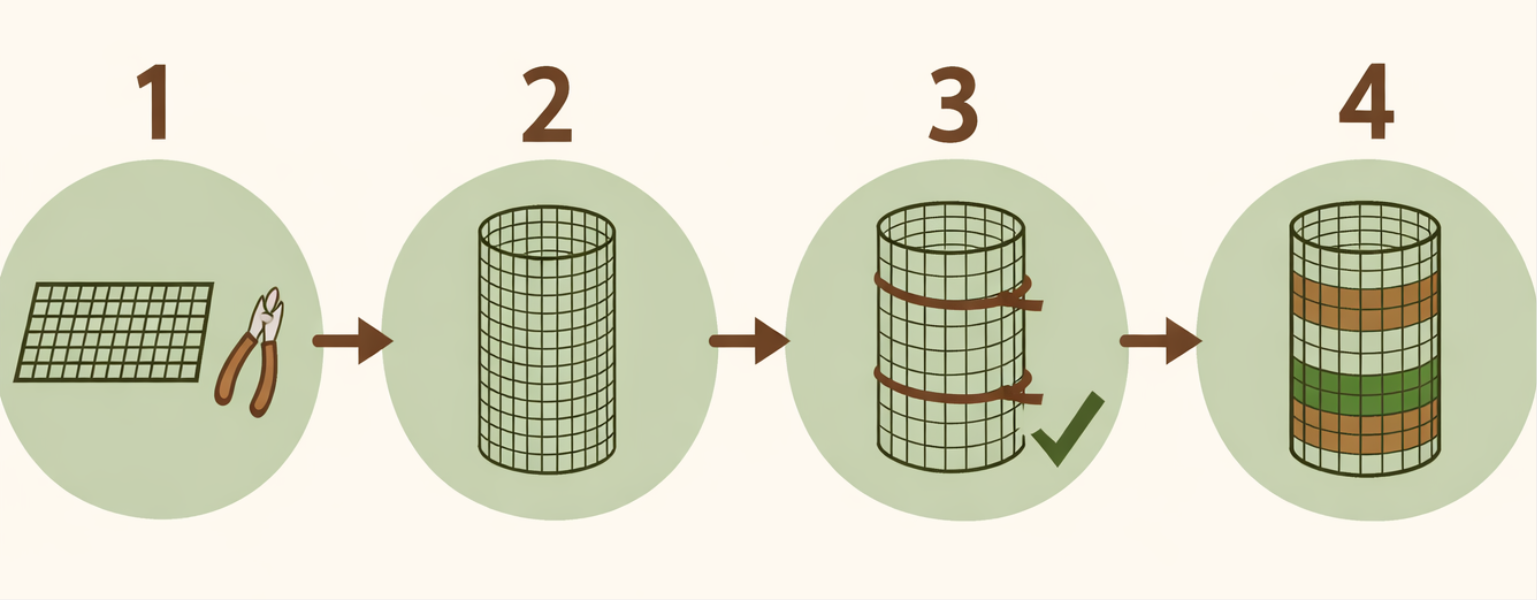
You do not need a store-bought bin to contain a pile. A simple wire mesh cylinder works well and takes about 15 minutes to build.
- Cut a 10-foot length of 36-inch-tall hardware cloth or welded wire mesh.
- Roll it into a cylinder roughly 3 feet in diameter.
- Secure the overlap with zip ties or wire clips every 6 inches.
- Set it on level ground, fill it up, and start composting.
Which Method Is Right for You?
Your best method depends on three things: how much space you have, how much you want to spend, and how fast you need results. Here is a quick decision framework.
These categories are not rigid. Many composters combine methods: a tumbler for kitchen scraps plus an open pile for bulk yard waste. Start with one and add a second when you see how much material you generate.
Getting Started: 5 Backyard Composting Basics
Whichever method you choose, the fundamentals are the same.
1. Pick your method. Use the comparison table above to match your space, budget, and timeline.
2. Choose a spot. Partial shade, good drainage, and close to the kitchen so you actually use it.
3. Balance greens and browns. Greens (food scraps, grass clippings, coffee grounds) provide nitrogen. Browns (dried leaves, cardboard, straw) provide carbon. Aim for roughly 2 parts browns to 1 part greens by volume. According to Cornell University’s Composting Science program, the ideal carbon-to-nitrogen ratio falls between 25:1 and 30:1, and a 2:1 browns-to-greens mix approximates that range well.
4. Manage moisture. Compost should feel like a wrung-out sponge. Too dry and decomposition stalls. Too wet and the pile goes anaerobic. Add browns to absorb excess moisture, or water lightly during dry spells.
5. Turn regularly. Turning introduces oxygen and prevents odor. Tumblers need a spin every 2-3 days. Bins benefit from weekly aeration. Open piles should be turned every 1-2 weeks.
Editor’s note: The most common beginner mistake is not adding enough browns. Kitchen scraps are wet and nitrogen-rich. Without enough dry carbon material, the pile turns slimy and smelly within weeks. Keep a bag of dried leaves or torn cardboard next to your bin and add a handful every time you drop in food scraps.
FAQ
Is backyard composting worth it?
Yes. The average household can divert roughly 30% of its waste through composting, saving money on trash bags and store-bought soil amendments. Finished compost also improves soil structure, water retention, and plant health. These benefits compound year after year.
What is the best method for backyard composting?
It depends on your space, budget, and timeline. Open piles work best for large yards with plenty of waste. Stationary bins suit most suburban homes. Tumblers deliver the fastest results in small spaces. See the comparison table above for a full breakdown.
How long does backyard composting take?
Timelines vary by method. A tumbler can produce finished compost in 4-8 weeks with regular turning. Stationary bins typically take 3-6 months. Open piles may need 6-12 months depending on management and climate.
What should you not put in backyard compost?
Avoid meat, fish, dairy, oils, pet waste, and diseased plants. These attract pests and can introduce pathogens. Also skip treated or painted wood, glossy paper, and anything sprayed with persistent herbicides.
Does a compost pile need sun or shade?
Partial shade is ideal. Sun speeds up decomposition but dries out the pile faster, especially in hot climates. A spot that gets morning sun and afternoon shade balances heat and moisture well.
Do you need a bin to compost in your backyard?
No. An open pile works fine if you have space and do not mind the look. However, bins and tumblers offer better pest control, faster decomposition, and a tidier appearance, which matters in suburban neighborhoods.
How do I keep pests out of my backyard compost?
Always bury food scraps under a layer of browns like leaves or cardboard. A sealed tumbler is the most pest-resistant option. For bins and piles, avoid adding meat or dairy and consider hardware cloth lining at the base to deter rodents.
Can you compost in a small backyard?
Absolutely. A compact tumbler or a slim stationary bin fits in as little as 4 square feet. Place it near the kitchen door for convenience, and you can compost just as effectively as someone with a large yard.
You might also like
Free for beginners
Get the Free Composting Starter Kit
5-day email course + printable guide + our top product picks. Everything you need to start composting confidently.
Get Free AccessNo spam. Unsubscribe any time.