What Can You Compost? Complete List of What Goes In (and What Doesn’t)
The question is never “can I compost?” It’s always about one specific thing. Tea bags. Bread crusts. Yesterday’s leftover rice. Citrus peels that feel like they should be fine but something seems off.
For most of these, the answer isn’t a flat yes or no. It comes down to two things: whether your pile gets hot enough to break down tough materials, and whether your bin is enclosed enough to keep pests out. Understand those two factors and most of the gray-zone items answer themselves. If you’re still figuring out the basics, our complete beginner’s guide to composting covers the full process.
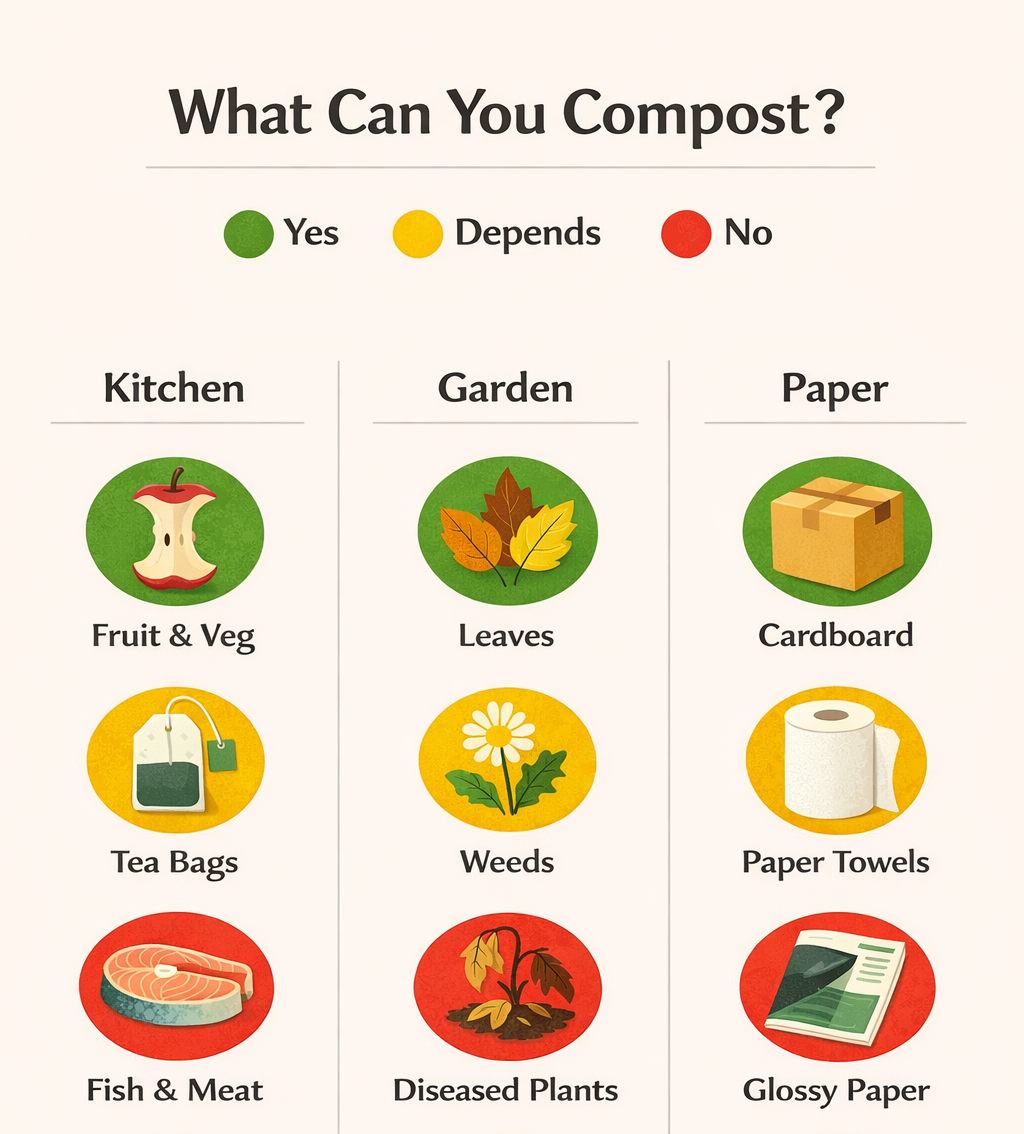
What Can You Compost?
Kitchen Scraps
Most kitchen scraps go straight in:
- Vegetable and fruit scraps: yes. Peels, cores, tops, seeds. The backbone of kitchen composting.
- Coffee grounds and paper filters: yes. One of the best compost additions. Earthworms actively seek them out.
- Eggshells: yes. Crush them first to speed up breakdown. They add calcium and improve soil structure.
- Tea bags: depends. See below.
- Citrus peels (orange, lemon, lime): yes, in moderation. The acidity concern is mostly a myth at normal quantities. A pile of nothing but citrus peels would slow decomposition, but a few peels per week in a balanced pile is fine.
- Bread, pasta, and grains: depends. See below.
- Cooked vegetables and plain starches: depends. See below.
- Meat, fish, and bones: no for standard backyard piles. They attract rats, flies, and raccoons and produce strong odor during breakdown. Bokashi handles meat and fish through fermentation and is the only method that does.
- Dairy (cheese, butter, yogurt): no. Same reasons as meat: odor and pest attraction.
- Oils and fats: no. They coat organic material and block air circulation, slowing the entire pile.
Yard and Garden Waste
- Dry leaves: yes. Shred them first. Whole leaves mat together and block airflow.
- Grass clippings: yes. Add in thin layers. A thick clump of fresh clippings turns into a slimy, airless mat.
- Plant trimmings and stems: yes. Chop woody stems into smaller pieces.
- Weeds: depends. Safe if your pile reliably reaches 130°F (54°C), which kills seeds. In a cool passive pile, weed seeds survive and sprout when you spread the compost. When in doubt, bag them.
- Diseased plants: no. Most home piles don’t sustain the temperatures needed to kill fungal spores and pathogens. Don’t risk spreading the disease to your garden.
- Pet waste (dogs and cats): no. Contains harmful pathogens including salmonella and toxoplasma. Livestock manure from chickens, rabbits, or horses is fine and actually beneficial.
Paper and Cardboard
- Corrugated cardboard: yes. Remove tape, tear into fist-sized pieces, wet before adding. One of the best carbon sources available.
- Newspaper: yes. Modern newspaper inks are soy-based and compost-safe. Shred or tear to speed breakdown.
- Paper bags: yes. Same as newspaper.
- Paper towels and napkins: depends. See below.
- Glossy and coated paper: no. The clay coating does not break down in a compost pile.
- Thermal paper receipts: no. Most contain BPA or BPS coating. Skip these.
The Items People Are Most Confused About
Can You Compost Tea Bags?
It depends on the bag material. Paper tea bags compost completely and add nitrogen to your pile. Nylon and plastic mesh bags don’t break down. Tear the bag open, empty the leaves directly into your bin, and discard the bag itself. When in doubt, check the packaging. Many premium brands now label bags as “plastic-free” or “plant-based” specifically because this question comes up so often.
Can You Compost Bread?
Bread attracts pests in an open pile. Rats and mice are drawn to the smell, and bread doesn’t have enough bulk to bury deep enough to block access. In an enclosed tumbler or sealed bin, it breaks down quickly and without issue. The same goes for pasta, rice, and other cooked grains. If you have a tumbler, add bread freely. If you have an open pile, skip it or add only small amounts buried deep in the center.
Can You Compost Citrus Peels?
Yes. The idea that citrus kills worms or acidifies the pile comes up constantly, but it isn’t supported by evidence at normal household quantities. Worms avoid fresh citrus temporarily because of the strong oils. They return once the peel starts to break down. A balanced pile handles citrus without any issue. One real caveat: citrus peels break down more slowly than softer scraps, so chop them up if you want faster results.
Can You Compost Cooked Food?
Plain cooked vegetables, potatoes, and grains are fine in an enclosed composter or tumbler. Open piles are a different story. The smell travels and rodents find it quickly, even if you bury the material. Cooked food with sauces, oils, or meat brings additional problems: fats coat other material and attract pests even in enclosed systems. Stick to plain cooked plant matter, keep quantities moderate, and bury it in the center of the bin.
📝 Editor’s note: The enclosed-bin rule for cooked food is real, but even then, moderation matters. A few spoonfuls of plain leftover rice or roasted vegetables buried in an active pile break down fine. Where people run into trouble is adding large quantities at once, which overwhelms the pile before microbes can keep up. Keep cooked additions to a handful at a time and you rarely have issues.
Can You Compost Paper Towels?
Yes, if they were used for everyday tasks: wiping hands, drying vegetables, cleaning up food spills. Paper towels are just wood pulp and compost readily. The exception is paper towels used with chemical cleaners, bleach, or disinfectant sprays. Those chemicals slow decomposition and harm the microbial life in your pile. If it touched cleaning products, bin it instead.
What Not to Compost
The U.S. Environmental Protection Agency specifically flags these items for home compost piles. Keep them out:
- Meat, fish, and bones: strong odor, attracts pests and predators
- Dairy products: odor and pest attraction, slow to break down
- Oils and fats: block airflow, create anaerobic pockets
- Diseased plants: pathogens and fungal spores survive most home piles
- Pet waste (dogs and cats): pathogen risk to humans handling finished compost
- Treated or painted wood: chemicals leach into finished compost
- Coal ash: contains sulfur and iron compounds that harm plants. Wood ash in small amounts is fine.
- Glossy paper and thermal receipts: clay coating and BPA don’t break down
Meat and dairy specifically can be handled through a bokashi fermentation system. Bokashi uses different biology than traditional composting and accepts materials that standard piles cannot.
Quick Reference
| Item | Compostable? | Notes |
|---|---|---|
| Fruit and vegetable scraps | Yes | Core kitchen input |
| Coffee grounds | Yes | Excellent nitrogen source |
| Eggshells | Yes | Crush first |
| Dry leaves | Yes | Shred to avoid matting |
| Grass clippings | Yes | Thin layers only |
| Cardboard | Yes | Remove tape, tear into pieces |
| Newspaper | Yes | Soy inks are compost-safe |
| Tea bags | Depends | Paper yes, nylon/plastic: remove bag |
| Citrus peels | Depends | Yes in moderation; chop for faster breakdown |
| Bread and grains | Depends | Enclosed bin or tumbler only |
| Cooked vegetables | Depends | Enclosed only, no sauces or oils |
| Paper towels | Depends | Yes if no chemical cleaners |
| Weeds | Depends | Safe only in hot pile (130°F / 54°C+) |
| Meat, fish, bones | No | Pests and odor; bokashi only |
| Dairy | No | Pests and odor |
| Oils and fats | No | Blocks airflow |
| Diseased plants | No | Pathogens survive home piles |
| Pet waste (dog/cat) | No | Human pathogen risk |
| Glossy paper / receipts | No | Coatings don’t break down |
FAQ
What happens if I add the wrong things to my compost?
It depends on what you added. Meat and dairy attract pests and create a strong odor. Diseased plants or pet waste introduce pathogens that survive decomposition. Oils slow the entire pile by starving it of oxygen. Most mistakes are recoverable: bury the offending material deep, add dry carbon material (cardboard, leaves) to rebalance, and turn the pile. For serious pest problems, switch to an enclosed tumbler.
My compost pile smells bad. What did I add wrong?
A rotten or sulfur smell almost always points to too much wet nitrogen material with not enough airflow. Common culprits: a thick layer of grass clippings, too many fruit scraps without any dry material to balance them, or meat and dairy. Fix: add dry cardboard or leaves, turn the pile to introduce oxygen, and stop adding wet materials until the smell clears. For more on diagnosing odors, see our guide to why compost smells bad.
Can I compost in winter?
Yes, with adjusted expectations. Microbial activity slows sharply below 50°F (10°C) and nearly stops below freezing. Your pile won’t decompose in winter, but it won’t be ruined either. Kitchen scraps can keep going into the pile all winter. Activity resumes in spring when temperatures rise. If you want year-round production, an insulated bin or indoor worm bin keeps working through cold months.
How long does it take for kitchen scraps to break down?
In an active hot pile that’s turned regularly, kitchen scraps break down in 2 to 4 weeks. In a passive pile that’s rarely turned, the same scraps can take 3 to 6 months. Soft materials like fruit scraps and coffee grounds break down fastest. Eggshells, citrus peels, and cardboard take longer. Chopping or shredding material before adding it speeds things up noticeably regardless of method.
Can you compost in a worm bin instead of a regular pile?
Yes, and worm bins handle most kitchen scraps better than outdoor piles. Worms process coffee grounds, vegetable scraps, eggshells, paper, and cardboard very well. They prefer cooler, moist conditions that an outdoor hot pile doesn’t maintain. The tradeoff is volume: a worm bin processes smaller quantities than a large outdoor pile. For a full breakdown of how it works, see our guide to worm composting.
What’s the difference between composting and bokashi?
Traditional composting uses bacteria and fungi to break down organic matter through decomposition. Bokashi uses fermentation: an inoculated bran culture pickles the organic material rather than rotting it. The key difference is what each method accepts. Bokashi handles meat, fish, dairy, and cooked food. Traditional composting does not. After bokashi fermentation (2 weeks), the material still needs to be buried in soil or added to a traditional pile to finish breaking down.
How do I know when my compost is ready to use?
Finished compost is dark brown, crumbly, and smells like fresh earth, not like the materials that went in. You shouldn’t be able to recognize any of the original inputs. A simple test: fill a sealed bag with a handful of compost and leave it for a week. If it still smells earthy when you open it, it’s ready. If it smells sour or like ammonia, it needs more time.
Can I compost if I live in an apartment?
Yes. Two methods work well indoors: worm bins and electric composters. A worm bin fits under a kitchen counter, processes food scraps continuously, and produces both compost and liquid fertilizer. Electric composters like the Lomi process scraps in hours with no odor. For a full overview of both options, see our guide to apartment composting.
You might also like
Free for beginners
Get the Free Composting Starter Kit
5-day email course + printable guide + our top product picks. Everything you need to start composting confidently.
Get Free AccessNo spam. Unsubscribe any time.