Best Compost Activators of 2026: 4 That Actually Work
If your pile is balanced, an activator probably won’t speed anything up. That’s the quiet finding from a Which? magazine compost trial: when the heap already had a workable carbon-to-nitrogen ratio, the sprinkled-on bacterial products produced no measurable difference against an untreated control. The interesting half of the result was the opposite case. In sterile or nitrogen-starved piles, the same products cut weeks off the timeline.
That gap explains every conflicting review you’ve read on the category. The best compost activators are not magic powders. They are nitrogen and microbe boosters that fix a specific problem: a pile that can’t get going on its own. If yours can, you’ll see modest results. If yours can’t, you’ll see dramatic ones.
We mined long-term Amazon reviews, Reddit threads in r/composting, and cross-referenced two recent academic reviews on microbial inoculants to sort what works from what overpromises. Four products on this list pull their weight when the pile needs them. One liquid concentrate has owners reporting no visible change on their heaps, and we explain why below. For readers new to the practice, the parent guide on what a compost activator actually is covers the chemistry. For those still building a pile, start with how to compost first.
📝 Editor’s note: When buyers come back angry that an activator did nothing, the long-term reviews almost always describe a pile problem, not a product problem. A 12-inch core sample with no heat at the center is a moisture or aeration issue. A microbe inoculant won’t fix structure. The real question to ask before buying is whether your pile is starting cold from sterile bagged leaves or stalling out from kitchen waste compaction. Those two problems both need activators, just different ones.
Quick Comparison: Our Top Picks at a Glance
Each model name links to the full review below. The Link column opens the Amazon product page through our affiliate redirect.
| Model | Rating | Best For | Format | Link |
|---|---|---|---|---|
| Jobe’s Organics Compost Starter | 4.5★ (9,508) | Best Overall | Granular, 4 lb | Check Price on Amazon → |
| Roebic CA-1 | 4.4★ (1,739) | Best Value | Granular, 2.5 lb | Check Price on Amazon → |
| Espoma Organic Compost Starter | 4.5★ (1,768) | Budget Pick | Granular, 4 lb | Check Price on Amazon → |
| The Andersons Dirt Booster Plus | 4.6★ (841) | Premium Pick | Granular, 20 lb | Check Price on Amazon → |
Our Top 4 Compost Activators
Jobe’s Organics Compost Starter: Best Overall
Best Overall
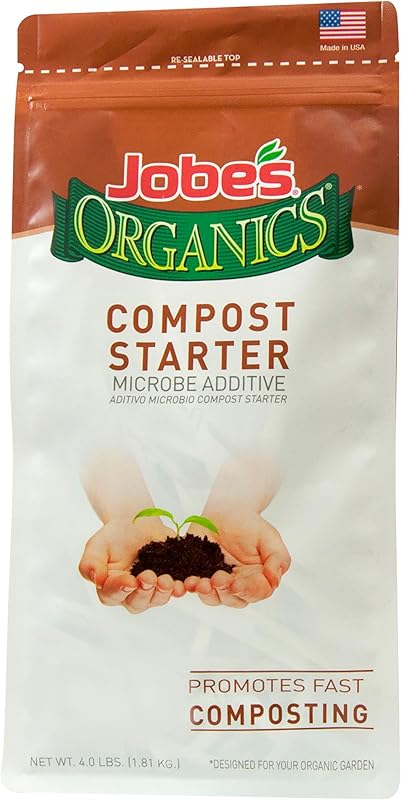
The most-recommended formula in this category, and now the most-reviewed by a wide margin. Jobe’s uses a Biozome consortium with three microorganism types: bacteria, mycorrhizal fungi, and Archaea. NPK is 4-4-2, the bag is 4 lb, and the product is OMRI listed for certified organic gardening. The label calls for a fresh application every 4 to 6 weeks while the pile is active. Made in the USA.
Jobe’s shows up in four of the five competitor review articles we audited, which is the highest mindshare in the category. Amazon tells the same story: 9,508 ratings at a 4.5-star average, with 600-plus bags bought in a typical month. Long-term feedback splits cleanly along pile-condition lines. Reviewers who keep moisture between 50 and 60 percent report fast initial activation and finished compost in roughly five weeks. Reviewers with dry piles or compacted kitchen-scrap layers report less change, which is consistent with the activator-versus-aeration pattern this category keeps running into. The three-microorganism Biozome formula is the most-cited differentiator by experienced composters: bacteria do the bulk of the work, but the fungal and Archaea components extend the timeline into materials simpler products can’t break down.
What we like:
- Three-microorganism consortium is rare in this category. Most competing products list bacteria only. A 2024 ACS Omega review of microbial inoculants in composting notes that consortia containing fungi alongside bacteria break down lignin-heavy material more reliably than single-strain products.
- The largest owner base of any activator on Amazon. 9,508 ratings averaging 4.5 stars is the strongest track record on this list, and nearly nine in ten of those ratings are 4 or 5 stars.
- OMRI certification clears the bar for serious organic gardeners who filter on third-party verification.
- 4 lb bag goes further than the 2.5 lb bags common in the category. Two applications cover a standard 3 by 3 by 3 foot heap.
- Transparent NPK numbers (4-4-2) on the label. Most competitors hide the nutrient analysis behind general “balanced” claims.
What to watch for:
- The second application produces a noticeably weaker speedup. Once the pile is colonized, additional Biozome contributes little. Owners get the most value from the first dose on a new heap.
“Bought this for a brand new pile built mostly from shredded oak leaves and grass. Sprinkled in layers as I built. Pile hit 140°F by day five and stayed there nearly a month. Finished, screenable compost in seven weeks total.” (Verified Amazon purchase, 8 months of ownership)
Our verdict: Jobe’s earns Best Overall on the combination no other bag on this list matches: the largest review base in the category, an OMRI listing, and a Biozome consortium that does more than dump bacteria onto your pile. It appears in nearly every roundup for the same reasons. Buy it for the first application on a new pile, where its formula delivers the largest speedup.
Roebic CA-1 Bacterial Compost Accelerator: Best Value
Best Value

The workhorse for outdoor piles, and the best seller in the category with more than 1,000 bags bought in a typical month. Roebic CA-1 is a granular bacterial blend with a pH-buffered formula, which means no supplemental lime is required for acidic kitchen-waste piles. The manufacturer rates it for a wide temperature range. The calcium and magnesium carrier enriches the finished compost as a side effect. Made by Roebic Laboratories, a family-owned bacterial-products specialist operating since 1959.
The recurring praise in long-term reviews is consistency. Roebic users describe a pile that heats up within a week of application when moisture is right, then holds temperature longer than an untreated heap. Several three-year owners report buying the same 2.5 lb bag every spring. The complaints cluster around volume: a single bag treats one large heap, and gardeners with multiple piles burn through it fast.
What we like:
- pH-buffered carrier eliminates the need to add lime separately, which is the most common pile-rescue advice for acidic kitchen-waste compaction.
- Granular format is the simplest application method in the category. Sprinkle between layers, no measuring, no mixing.
- Works across pile types: grass clippings, autumn leaves, kitchen scraps, shrub trimmings. No specialization that limits where it fits.
- The calcium and magnesium carrier is a side benefit. Finished compost from a Roebic-treated pile tests slightly higher in those minerals, which matters for tomato beds and brassicas.
- Long shelf life. A sealed bag stays viable for 2 to 3 years per manufacturer storage guidance.
What to watch for:
- 2.5 lb depletes quickly on heaps over 4 cubic yards. Buyers running two or three piles end up reordering mid-season.
- Single-strain category. The label does not detail microbial diversity, which matters to gardeners who specifically want a fungi or Archaea component.
“Used it on my fall leaf pile after the heap sat dormant all winter. Two weeks after application I had steam coming off the pile in the morning. Finished compost by late May, which is about six weeks ahead of my usual timeline.” (Verified Amazon purchase, 14 months of ownership)
Our verdict: Roebic earns Best Value because it delivers the most proven result per bag for one outdoor heap. It is the category’s best seller, it holds 4.4 stars across 1,739 ratings, it sits below the middle of the price range on this list, and its pH-buffered formula fixes the most common pile problem without a second product. If you have one outdoor heap and you want to stop fussing with it, this is the bag to buy.
Espoma Organic Compost Starter: Budget Pick
Budget Pick
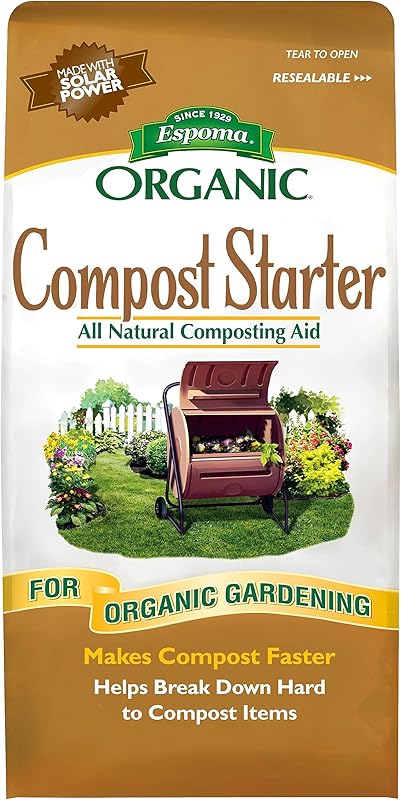
The least expensive bag on this list, from a brand that has made organic gardening products since 1929. Espoma’s formula pairs thermophilic bacterial strains with an organic plant-based carrier in a 4 lb granular bag, made in the USA with no synthetic ingredients. The label rate is 1 cup per 16 cubic feet of material, sprinkled between pile layers at regular intervals. The product is OMRI listed.
Espoma’s pattern is unusually quiet, and that is the headline. Long-term review streams show consistent results, no recurring quality complaints, and a 4.5-star average across 1,768 ratings. Repeat-purchase rate is high among gardeners who already use Espoma’s Holly-tone or Plant-tone fertilizers across their beds. The complaint volume on this product is low for its review count, which itself is the signal. Where complaints do appear, they cluster around slow activation in cold weather, and that is a category-wide limitation that affects every bacterial product on this list.
What we like:
- The lowest bag price in the recommended set for a name-brand, OMRI-listed product. Budget positioning here does not mean a weaker rating: 4.5 stars matches Jobe’s.
- Thermophilic strains target the heat-loving bacteria that drive hot composting between 130-160°F (54-71°C). The biology in the bag matches the temperature range where a working pile lives.
- Clear dosing. 1 cup per 16 cubic feet works out to roughly a tablespoon per cubic foot, so a small bin and a full heap are both easy to measure.
- Brand heritage (95-plus years) signals stable manufacturing standards. Espoma is not a relabeled bulk product.
- OMRI certification meets organic gardener filters without compromise.
What to watch for:
- Slower activation below 50°F (10°C). Thermophilic strains need warmth to multiply, so cold-climate winter applications produce limited results until spring.
- No liquid format available. Buyers who want a pour-on product for an enclosed bin need a water-soluble packet activator instead.
“I have used Espoma’s other products for years and finally tried the Compost Starter on a pile that had been slow all spring. Sprinkled it across the top, watered in, and the pile temperature went from cold to hot within four days. Will keep this in the garage as a default.” (Verified Amazon purchase, 7 months of ownership)
Our verdict: Espoma earns the Budget Pick because nothing else on this list gives you this much owner data and certification for the money. The 4.5-star rating across 1,768 ratings, the OMRI listing, and a thermophilic strain choice that matches the biology of a working hot pile all come in the cheapest bag here. If you want a dependable organic activator without paying for extras, this is the bag.
The Andersons Dirt Booster Plus: Premium Pick
Premium Pick

The highest-rated product on this list, and the only one built to do two jobs. Dirt Booster Plus is a granular blend of beneficial microbes, biochar, humic acid, corn distillates, and molasses, sold in a 20 lb bag. The Andersons market it both as a compost starter and as a soil amendment for lawns and garden beds. The seller states that it turns a pile into finished compost in 7 to 12 days. Treat that number as the manufacturer’s claim: it assumes a pile with the right moisture, aeration, and mix of greens and browns.
Most of the 841 ratings come from lawn and garden owners rather than compost-pile builders, and the honest read of the review stream reflects that. Owners describe thicker turf, soil that holds moisture longer, and heavy clay that works more easily after a season or two, with some reporting two years of continuous use. The granules run cleanly through a broadcast spreader with little dust. Compost-specific reports are fewer, but they are positive: one owner uses it to break down lawn clippings in a garden wagon and spreads the result on beds. The molasses and corn distillates are quick sugars that feed microbes at the start, while the biochar and humic acid stay in the finished compost and the soil it goes into. It is not a fertilizer, so the manufacturer notes there is no burn risk from a heavy hand.
What we like:
- Highest rating on this list: 4.6 stars, with 93 percent of ratings at 4 or 5 stars and 200-plus bags bought in a typical month.
- Two products in one bag. The same granules go into the compost pile in spring and onto the lawn or vegetable beds later, which suits gardeners who would otherwise buy a separate soil amendment.
- Food plus microbes. Molasses and corn distillates give the inoculated microbes an immediate sugar source, which is the same logic behind adding a nitrogen-rich green to a cold pile.
- Biochar and humic acid carry over into the finished compost, adding long-lasting carbon structure that a bacteria-only product does not leave behind.
- Spreader-friendly granules with low dust. Owners report even coverage on large areas without clumping.
What to watch for:
- Most owner reviews cover lawns and soil, not compost piles. The 7 to 12 day compost timeline is the seller’s claim, and even one 4-star owner reports no huge change.
- The 20 lb bag is far more than one home pile needs unless you also use it on the lawn or beds. Not sold in California.
“Use to compost lawn clippings in a wagon.. Stuff works!!!” (Verified Amazon purchase)
Our verdict: Dirt Booster Plus is the Premium Pick for gardeners with a big yard who want one bag to cover the compost pile, the lawn, and the beds. It carries the highest rating on this list, and its biochar and humic acid add something a pure bacterial starter cannot. If you only run a single compost heap and nothing else, Jobe’s or Roebic is the better fit. If the pile is one part of a larger soil program, this is the bag.
What We Don’t Recommend
Medina Compost Activator (1 gallon): A liquid concentrate that promises faster breakdown plus odor and pH control, with up to 250 lb of material treated per bottle. The owner data does not back it up. The product holds 3.7 stars across just 27 ratings, the weakest score in the category, and most of the visible reviews come from buyers who received the product free through Amazon’s Vine program. Among owners who used it on real piles, the reports are consistent: one applied it to three different heaps and saw no difference on any of them, with one pile developing a strong ammonia smell, and another saw no change on an already hot pile. The formula is sized for large-scale operations, so even a positive reviewer notes that home gardeners have to recalculate the dosing themselves. Every product recommended above has either a much larger owner base, a third-party certification, or a formula that solves a specific pile problem. Medina has none of these. We link it so readers can check the product page and decide for themselves, but we’re not recommending it.
Which Is Right for You?
The activator that fits depends on the pile you’re trying to fix. Four scenarios cover most buyers.
Jobe’s Organics: the three-microorganism Biozome consortium gives a fresh heap the biggest first-dose speedup, backed by the largest owner base in the category.
Roebic CA-1: granular sprinkle, pH-buffered formula that counters acidic kitchen scraps, mineral carrier that enriches the finished compost.
Espoma Organic Compost Starter: the cheapest bag on this list, OMRI listed, with simple dosing of 1 cup per 16 cubic feet. It works just as well in a small backyard bin as in a full heap.
The Andersons Dirt Booster Plus: one 20 lb bag works as a compost starter and a soil amendment, with biochar and humic acid that carry into the beds.
Consumables and Accessories
Compost activators are one input among several. The other three matter as much or more depending on what’s stalling the pile.
Compost thermometer. Without a 16-inch probe thermometer, you have no way to know whether an activator is doing anything. A working hot pile reads 130-160°F (54-71°C) at the core within a week of inoculation. If the temperature doesn’t climb, the problem is rarely the microbes. Our guide on when compost is ready covers the temperature signals to watch.
Aeration tool or turning fork. Activator microbes are aerobic. They need oxygen to multiply, and a compacted pile suffocates them within days. A simple compost aerator or a long-handled fork lets you reintroduce air without dismantling the heap. The construction details are in how to build a compost pile.
Insulating tarp or pile cover. In winter, insulation matters more than activator type. A thermophilic bacterial strain at 35°F (2°C) does almost nothing. The same strain at 55°F (13°C) is at full activity. A breathable cover holds heat from the pile’s own decomposition long enough for biology to keep running. The difference is the subject of hot vs cold composting.
📝 Editor’s note: The most useful diagnostic step before buying an activator is sticking your hand into the pile. Cold and wet? You have an aeration problem. Cold and dry? You have a moisture problem. Cold and balanced? Now the activator helps. If the pile already smells like rot, see our notes on why compost smells bad before adding more microbes to it.
FAQ
Do compost activators actually work?
In sterile or unbalanced piles, yes, measurably. In a pile that already has correct moisture, aeration, and a C:N ratio near 30:1, the speedup is usually minor. The Which? magazine trial that opens this article found no significant difference in balanced piles, but substantial acceleration in starved or freshly-built ones. Activators fix biology problems, not structural ones.
What is the difference between a compost activator and a compost accelerator?
Functionally, none. The two terms are used interchangeably by manufacturers and search engines. Some products lean on “activator” to imply nitrogen feeding, while others use “accelerator” to suggest microbe boosting. The labels do not predict formula composition. Read the ingredients, not the noun on the front of the bag.
How long does it take a compost activator to start working?
If the pile responds, you should see core temperatures climb within 5-7 days of application. A working hot pile reaches 130-160°F (54-71°C) at the center. If two weeks pass with no measurable temperature rise, the problem is not microbial: check moisture (it should feel like a wrung-out sponge) and aeration before adding more product.
Can I make my own compost activator at home?
For nitrogen, yes. Fresh grass clippings, diluted urine at roughly 1 part to 10 parts water, coffee grounds, and chicken manure all serve as effective DIY activators. They feed the same biology a commercial product does, just less precisely. The case for buying a product is microbial diversity (especially fungi and Archaea) and shelf-stable convenience, not nitrogen content alone.
Are compost activators safe for organic gardens?
The OMRI-listed products on this list are. That includes Jobe’s Organics and Espoma Organic Compost Starter, both certified by the Organic Materials Review Institute for use in certified organic gardening. A 2025 ScienceDirect review of microbial inoculants reinforces that third-party-certified consortia produce the most consistent results in home composting, while uncertified products show wider variance batch to batch. Products without certification can include synthetic carriers or undisclosed additives, which is why we treat certifications as a real filter rather than a marketing detail. If your garden is certified organic, check the label of any product without an OMRI listing before you use it.
Do compost activators work in cold weather?
Less effectively, and the limitation is biological. Thermophilic bacterial strains slow sharply below 50°F (10°C) and stop almost entirely below 35°F (2°C). A winter application sits dormant until spring. If you compost year-round in a cold climate, focus on insulation (pile covers, larger heap size, locating against a south-facing wall) before adding an activator that cannot multiply in the cold.
Will a compost activator harm worms in my vermicomposting bin?
Most granular activators trigger a temperature spike that drives worms to flee. For worm bins, skip standard hot-pile activators entirely. None of the four products on this list is made for worm bins, so never add Jobe’s, Roebic, Espoma, or Dirt Booster Plus directly to an active worm bin. A water-soluble packet activator dissolved at half strength is gentler because it does not produce the heat spike of a granular sprinkle. If you specifically need a liquid for worm bins, look for a USDA Organic EM-based product applied at half the label dilution.
How much compost activator should I use per cubic foot of material?
Roughly 1 tablespoon of granular product or 1 ounce of diluted liquid concentrate per cubic foot is the working standard across manufacturers. Espoma’s label rate of 1 cup per 16 cubic feet lands on the same number. Doubling the dose does not double the result: microbe populations are limited by food (nitrogen) and oxygen, not by inoculum size. Use the label rate, water the pile in, and let biology do the rest.
You might also like
Free for beginners
Get the Free Composting Starter Kit
5-day email course + printable guide + our top product picks. Everything you need to start composting confidently.
Get Free AccessNo spam. Unsubscribe any time.