Best Worm Bins: Our Top Picks for Beginners and Serious Vermicomposters
Most worm bins on the market are overpriced plastic trays with a spigot. The spigot drips, the trays warp in year two, and the drainage layer clogs the first time you forget to harvest. A few are not built that way.
We cross-referenced Amazon long-term reviews with r/vermicomposting discussions and YouTube teardown videos to separate the genuinely reliable picks from the overhyped ones. New to vermicomposting? Our worm composting guide covers everything you need to know before investing in a bin.
The Best Worm Bins at a Glance
| Worm Bin | Rating | Type | Best For | Link |
|---|---|---|---|---|
| VermiHut Plus 5-Tray | 4.5★ (1,877) | Tray migration | Best overall | Check Price → |
| FCMP Essential Living | 4.5★ (673) | Tray migration | Best for beginners | Check Price → |
| Blütezeit 5-Tray | 4.6★ (344) | Tray migration | Best starter kit | Check Price → |
| Urban Worm Bag v2 | 4.4★ (569) | Flow-through | Best for scale | Check Price → |
What Actually Makes a Good Worm Bin
Three things matter most in a worm bin: drainage, ventilation, and a harvest system you’ll actually use. Everything else (brand, color, number of trays in the box) is secondary.
Drainage keeps your bin healthy. Leachate accumulates at the bottom of any bin, and a well-designed spigot makes draining it effortless. Ventilation determines worm health: red wigglers are aerobic organisms that need oxygen flow. Harvesting should feel easy, not like a chore. Whether it’s tray migration or flow-through, the best system is the one you’ll use consistently.
All four bins below handle these fundamentals well. The differences come down to your specific situation, which is why we ranked them for different use cases.
📝 Editor’s note: Worm bin failures almost always happen in the first three months, and the cause is almost always the same: overfeeding. New owners add too many scraps before the worm population has had time to establish and multiply. The fix is simple: feed half as much as you think you should for the first six weeks. Once you see the population visibly active across the whole bin surface, gradually increase volume.
VermiHut Plus 5-Tray Worm Composter
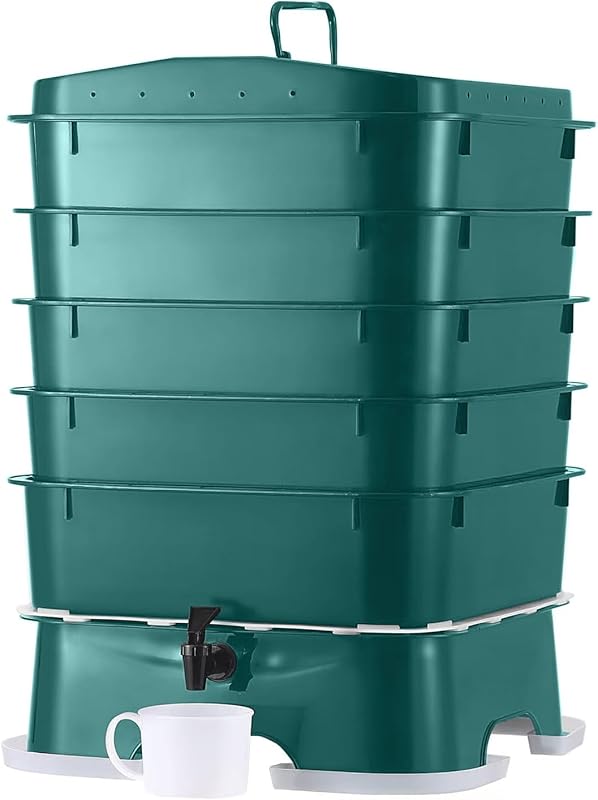
4.5★ | 1,877 reviews
The VermiHut Plus has the largest review base of any worm bin on Amazon, with 1,877 verified reviews, giving us the most reliable long-term data of any option. And that data tells a consistently positive story.
What owners say
Assembly gets consistent praise: most owners are up and running in under 30 minutes without tools. The side-ventilation design keeps moisture levels stable without constant intervention, which is a real advantage for beginners still learning to read their bin. The worm-saver tray catches escapees during tray transitions, a thoughtful detail that competitors don’t include.
- Assembly under 30 minutes, no tools needed, consistently praised across owner reports
- Side ventilation keeps conditions stable with less intervention required
- Worm-saver tray prevents worm losses during tray migration
- 1,877+ reviews means the most real-world long-term data available
- Expands to 8 trays as your worm population grows
- The spigot can develop slow drips over time. Keep a small container underneath as a simple precaution
- Lid isn’t perfectly sealed, so weigh it down if you’re in a fruit-fly-prone area
⭐⭐⭐⭐⭐ “Set this up in about 20 minutes, added my worms, and it’s been running perfectly for 8 months now. The ventilation keeps everything balanced: no smell, no fuss. Best composting purchase I’ve made.” Verified Amazon purchase, 8 months of ownership
FCMP Essential Living 2-Tray Worm Composter

4.5★ | 673 reviews
FCMP makes the outdoor tumbler that’s been a consistent bestseller for years, and their build quality is well established. The Essential Living follows the same philosophy: solid materials, considered design, nothing unnecessary.
The 2-tray starter format isn’t a budget compromise: it’s a deliberate approach. Smaller setup, smaller footprint, less to manage while you’re learning.
What owners say
Across 673 reviews, the consistent theme is that FCMP’s material quality is noticeably better than similarly-priced alternatives. The lid seals tighter than most competitors, and owners report fewer fruit fly issues, which is one of the most common early frustrations in vermicomposting. New vermicomposters frequently mention that the 2-tray format feels less intimidating than jumping straight into a 5-tray system.
- Build quality noticeably stronger than budget alternatives, consistent in owner comparisons
- Tighter lid seal means fewer fruit fly issues per owner reports
- 2-tray format genuinely easier to manage for first-time vermicomposters
- FCMP’s customer support rated responsive (appears frequently in positive reviews)
- Small footprint works perfectly in apartments and under kitchen sinks
- Active kitchens typically outgrow 2 trays in 3-4 months. Order expansion trays at checkout to stay ahead
- Starter kit is minimal compared to Blütezeit’s all-in-one package
⭐⭐⭐⭐⭐ “Perfect first worm bin. The quality feels really solid, and my kitchen has zero smell. Already ordered two more trays because my worms are thriving. Wish I’d started sooner!” Verified Amazon purchase, 5 months of ownership
Blütezeit 5-Tray Worm Compost Bin

4.6★ | 344 reviews
The Blütezeit has the highest average rating of the four bins in this roundup: 4.6 stars. It comes with the most complete starter kit of any option here: coir bedding, a composting guide, a moisture mat, and all accessories included in the box. Everything you need on day one, nothing extra to buy.
What owners say
Owners who’ve used multiple worm bins describe the Blütezeit as comparable to VermiHut quality with a better first-run kit. The snug tray fit gets specific praise: fewer gaps means fewer pest entry points. At a comparable price point, you’re getting more in the box.
- 4.6★: the highest rating in this group
- Most complete starter kit of the four options: everything in one box
- Snug tray fit per owner comparisons, fewer gaps for pests
- Comparable price to competitors, more included accessories
- Newer brand with 344 reviews, less long-term failure data than VermiHut’s 1,877
- Smaller community presence on Reddit and forums for troubleshooting
⭐⭐⭐⭐⭐ “Everything I needed was in the box. Set it up, added worms, and four months later it’s producing beautiful castings. The kit quality impressed me. Really well put together.” Verified Amazon purchase, 4 months of ownership
Urban Worm Bag Version 2

4.4★ | 569 reviews
The Urban Worm Bag is a fundamentally different kind of worm bin. Instead of stacking trays, it’s a breathable woven fabric bag with a continuous flow-through harvest design. Version 2 eliminated the original’s zipper issue, replacing it with a durable rollup-and-toggle closure.
What owners say
Experienced vermicomposters who switch from tray systems consistently report that worm health improves noticeably. The breathable fabric provides passive aeration that plastic bins fundamentally can’t match. Several owners who ran both systems side by side describe the difference as visible within two to three weeks: healthier, more active worms.
- Best aeration of any bin, consistently reported as key benefit by owners switching from tray systems
- Continuous bottom harvest once the system is established, no waiting for tray migration
- v2 design directly addresses the main failure mode of the original
- Higher capacity than any 5-tray system
- Worms physically cannot escape through the woven fabric
- No stand included: budget $20-40 for a sturdy metal plant stand rated for 50+ lbs
- Moisture management requires more attention than hard-sided plastic bins
⭐⭐⭐⭐⭐ “Upgraded from a tray system and the difference is night and day. My worms are visibly healthier, harvesting is effortless, and the aeration means I never deal with bad smells. Worth every penny of the upgrade.” Verified Amazon purchase, 9 months of ownership
Budget Option: DIY Worm Bin
A plastic storage container with holes drilled in the sides and a second container underneath to catch leachate works fine. Red wigglers don’t care whether their home is store-bought or homemade.
You need two opaque containers, a drill with a 1/8″ bit, and newspaper or cardboard for bedding. The whole setup takes 20 minutes. Where DIY falls short: drainage is more manual, there’s no built-in migration system, and fruit fly control is harder. But if you want to confirm vermicomposting suits your lifestyle before investing in a dedicated bin, a DIY bin is a legitimate starting point.
See also: How to compost in an apartment
What We Don’t Recommend
VIVOSUN 5-Layer Worm Compost Bin: 4.2★ (123 reviews)
The VIVOSUN looks like a reasonable alternative to the VermiHut Plus. Same tray-stacking concept, similar price, and it even comes with a little toolkit. We wanted to like it.
The problems show up after a few months. Owners report worms escaping through gaps between trays, a design flaw that shouldn’t exist in this category. The lid doesn’t secure to the bin, which invites fruit flies and makes the whole indoor-composting proposition harder to sell to a skeptical household. One reviewer with over ten years of vermicomposting experience called out the thin plastic and undersized trays as fundamentally limiting. The bin looks right but doesn’t perform right.
With only 123 reviews and a 4.2-star average, the long-term failure data is still thin. But what’s there paints a consistent picture: this is a VermiHut clone that cut corners where it matters most. The VermiHut Plus costs about the same, has 15 times more reviews, scores higher, and includes a worm-saver tray that the VIVOSUN lacks entirely.
A broader warning about budget stacking bins: Amazon is full of cheap tray-style worm composters from no-name brands. Most share the same problems: loose-fitting trays, flimsy plastic, no instructions, and customer support that disappears after the sale. If a 5-tray worm bin is priced significantly below our recommended picks, something was cut. Usually it’s material thickness, tray fit tolerance, or both. Those are exactly the things that determine whether your worms stay in the bin and whether the bin lasts more than one season.
Which Worm Bin Is Right for You?
VermiHut Plus: Nearly 2,000 reviews. You know exactly what you’re getting.
FCMP Essential Living: Add expansion trays at checkout.
Blütezeit: Best starter kit, everything in one box.
Urban Worm Bag v2: Better aeration, better harvesting, healthier worms.
Start with a DIY bin for two months, then upgrade.
Comparing composting methods? Best Compost Bins →
Where to Buy Red Wigglers
The bin is just the container. You’ll need red wigglers (Eisenia fetida) to populate it, not the earthworms from your garden, which are a different species and won’t thrive in a worm bin environment.
Uncle Jim’s Worm Farm is the most reviewed live worm supplier on Amazon and ships across the US. One pound (approximately 800-1,000 worms) is the right starting amount for any of the bins above. Avoid ordering in extreme heat (above 90°F) or cold (below 30°F): transit conditions affect survival rates.
Local sourcing is worth checking first: local composting programs, gardening Facebook groups, and community garden centers often sell red wigglers at lower prices, and locally sourced worms arrive without transit stress.
One pound of red wigglers on Amazon → (or check local composting networks first)
FAQ
How many worms do I need to start?
Half a pound (about 500g) of red wigglers is enough for any of the bins above. Start smaller rather than larger: a small population in a large bin tends to underperform because worms spread out and decomposition slows. Red wigglers (Eisenia fetida) are the species you want, not earthworms from the garden.
Where do I buy red wigglers?
Uncle Jim’s Worm Farm is the most consistently reviewed live worm supplier on Amazon. Local options (composting programs, gardening Facebook groups) are worth checking first since locally sourced worms arrive without shipping stress.
How often do I feed worms?
Once or twice a week for an established bin. Bury new food in a different spot each time, and don’t add more until the previous feeding is mostly broken down. Overfeeding is the most common beginner mistake: it leads to anaerobic conditions and bad smells.
What temperature is best for a worm bin?
Red wigglers are most active between 55-77°F (13-25°C). Below 50°F they slow significantly; above 95°F they’ll die. This is the primary consideration for outdoor use in climates with hard winters or hot summers.
How long until I get finished worm castings?
3-6 months from a cold start with healthy feeding habits. With a tray system, the bottom tray is typically ready once worms have fully migrated to the upper trays, a process that takes 4-8 weeks per tray.
Can I compost citrus and onions in a worm bin?
Yes, in small quantities. Large amounts of acidic or pungent material can irritate your worm population. Bury them in bedding rather than leaving them exposed on top.
Do worm bins smell?
A balanced bin smells like soil. Bad smells almost always mean the bin is too wet, overloaded with nitrogen-rich scraps, or has gone anaerobic from overfeeding. Add dry shredded cardboard or newspaper and reduce feeding temporarily.
Worm bin vs compost bin: which should I get first?
If you have a backyard and generate yard waste, a compost bin handles volume better. If you live in an apartment or want nutrient-dense castings for indoor plants, start with a worm bin. Many serious composters eventually run both: they serve different purposes.
You might also like
Free for beginners
Get the Free Composting Starter Kit
5-day email course + printable guide + our top product picks. Everything you need to start composting confidently.
Get Free AccessNo spam. Unsubscribe any time.